What is the recommended diet for treating leaky gut? What foods and food components can increase the integrity of our intestinal barrier?
Our intestinal tract is the biggest barrier between us and the environment. In addition to what we touch or breathe, what we eat is our greatest exposure to the outside world. Normally, our entire intestinal tract is impermeable to its contents, allowing our body to pick and choose what goes in and out. But there are things that can make our intestines leaky, and chief among them is our diet.
The typical American or Western diet can cause gut dysbiosis, which means disruption of our gut microbiome, which can lead to gut inflammation and a leaky gut barrier. Then, small bits of undigested food, bacteria, and toxins can slip uninvited from our intestines into the bloodstream and cause chronic inflammation.
“To avoid this dysbiosis and intestinal inflammation, a diet that is mainly vegetarian” – in other words, eating plants – “should be better.” The gut microbes of vegetarians are associated with gut microbiome balance, higher bacterial diversity, and gut barrier integrity. Vegetarians tend to have less uremic toxins, such as indole and p-cresol, and because fiber is the main food for our gut microbiome, the gut bacteria of those who eat a plant-based diet have been found to produce more good stuff—that is, fatty chain acids that play a “protective and nourishing role” for the cells that protect our barrier. Plant fiber is “very important” in maintaining the integrity of our gut barrier, but you won’t know for sure until you test it.
When people with non-alcoholic fatty liver disease were given whole grains, beans, lentils, fruits, vegetables, nuts, and seeds for six months, they had significant reductions in zonulin levels.
Zonulin is a protein responsible for the breakdown of the tight junctions between intestinal lining cells and is “considered the only measurable biomarker of intestinal barrier damage.” In other words, zonulin is a useful marker of leaky gut. But since adding all those plants seemed to lower the levels, that may “mean that a proper fiber diet helps maintain the proper structure and function of the intestinal barrier.” But a healthy whole plant diet is much more than just fiber. How do we know it’s fiber? And the study didn’t even have a control group. That’s why researchers say “intestinal permeability may be improved by dietary fiber” [emphasis added]. To prove cause and effect, it would be good to have a randomized, double-blind, cross-sectional study comparing the effect of the same diet with or without fiber.
Such a course does exist, in fact! A group of healthy young men were randomly assigned to eat pasta with or without added fiber, and there was a significant decrease in zonulin levels in the added fiber group compared to both pre-intervention levels and those of the control group, as you can see below and at 2:51 in my video. How To Heal Leaky Gut With Food.
Therefore, fiber appears to improve intestinal permeability.
Are there any plant foods in particular that can help? Curcumin, the yellow pigment in the spice turmeric, may help prevent intestinal damage caused by ibuprofen-type drugs in mice. Similar protection has been noted with the broccoli sulforaphane compound in rats. There are no human studies on broccoli yet, but there was a study on three days equivalent to 2 to 3 teaspoons a day of turmeric, which reduced symptoms of intestinal barrier damage and inflammation caused by exercise compared to a placebo. A little turmeric may work, too, but no small amounts have been tested.
If you ask alternative medicine doctors what treatments they use for leaky gut, number one on the list—after cutting back on alcohol—is zinc. You can see the list below and at 3:42 for me video.
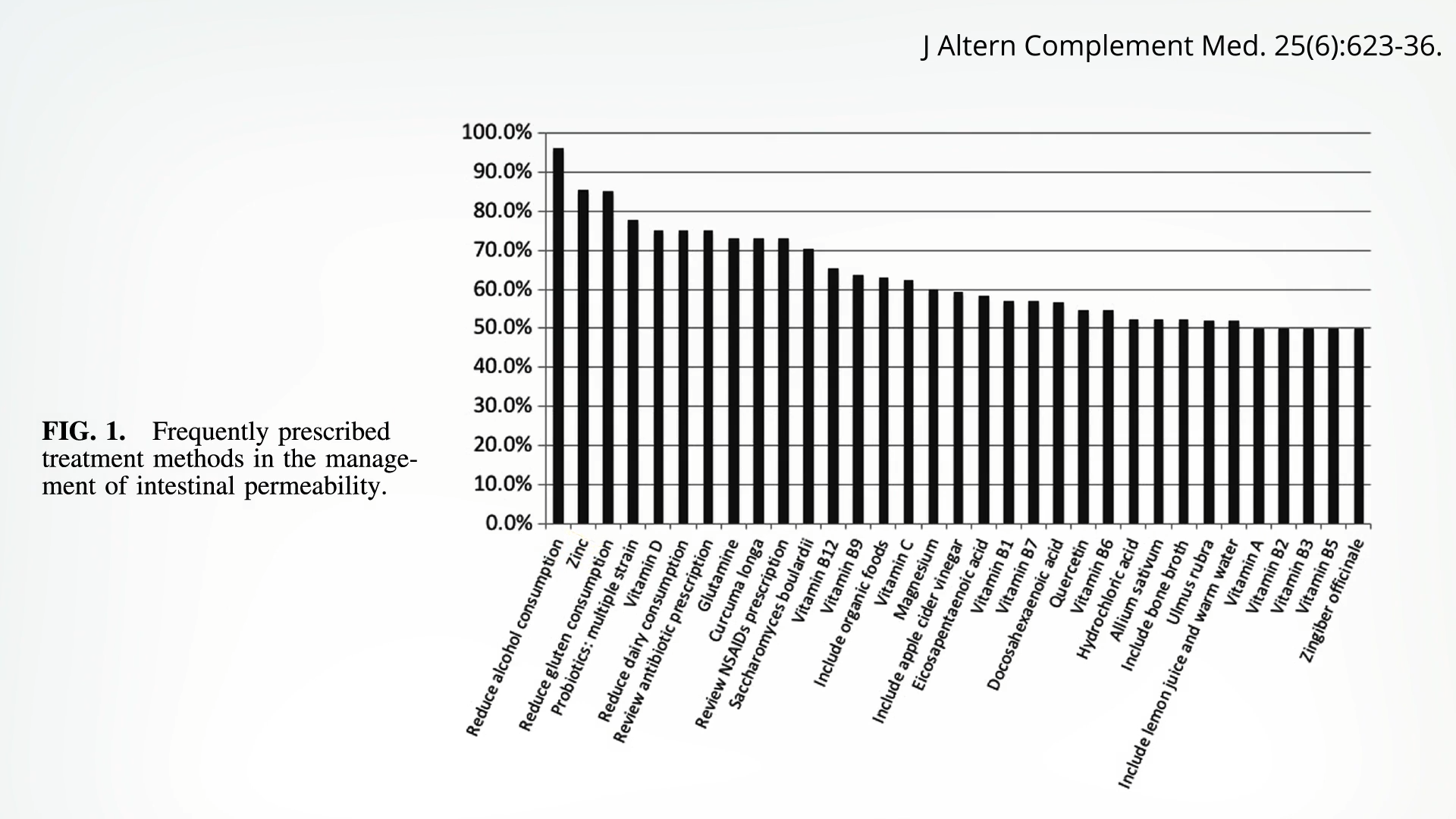
Zinc not only protects against intestinal damage caused by drugs like aspirin in mice; when tested in a randomized trial of healthy adults, the same thing was found. Five days of 250 mg of indomethacin, an NSAID drug, “caused a threefold increase in intestinal permeability,” as one would expect from that group of drugs. But this increase in absorption did not occur when the participants also took zinc, “highly suggesting the protective effect of the small intestine.” The dose they used was high, however—75 mg per day, almost twice the tolerable daily limit of zinc. What about getting zinc in normal doses from food?
A significant improvement in intestinal leakiness was found even with a 3 mg dose of zinc, suggesting that even low zinc supplementation may be effective. You can get an extra 3 mg of zinc in your daily diet by eating a cup (200g) of cooked lentils.
Doctor’s Note
For more on preventing intestinal dysbiosis and leaky gut, see Flashback Friday: Gut Dysbiosis: Starving Our Microbial Self again Avoid These Foods to Prevent Leaky Gut.