First Of Its Kind Meltwater Explosion Breaks Out Of Greenland Ice Sheet

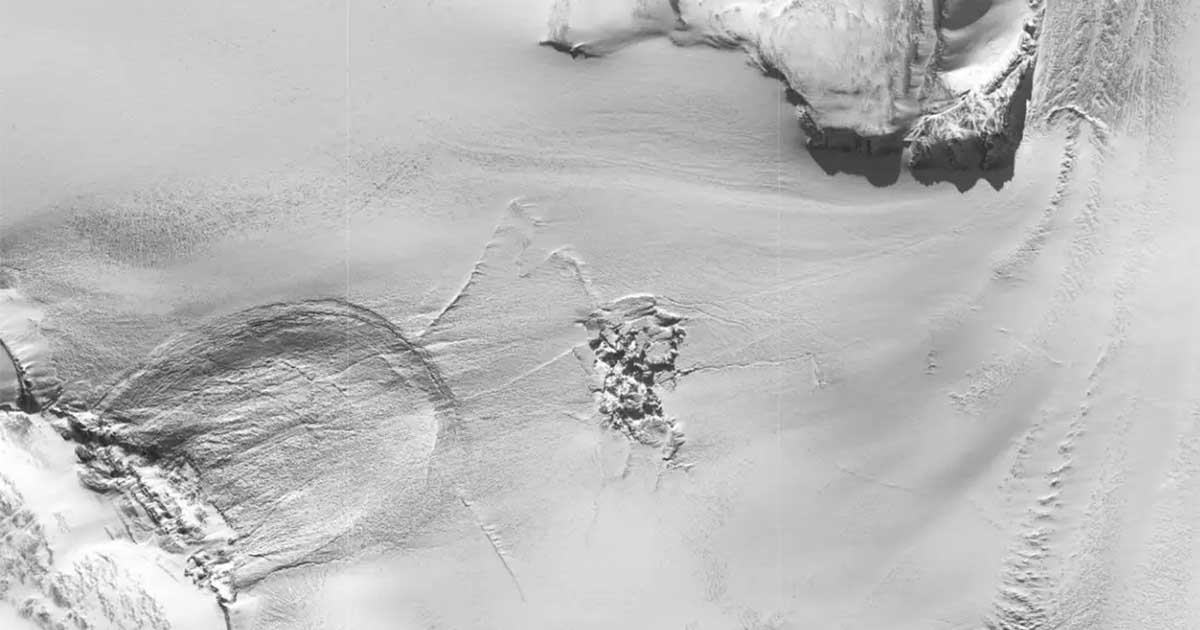
In 2014, an unprecedented eruption of a subglacial lake erupted from the Greenland ice sheet.
It left a 25-meter snowdrift and large crevasses in its wake. The scientists were surprised as they had never seen this phenomenon before. These findings challenge what we know about ice melt and indicate rapid climate change and global sea level rise.
A massive explosion of Greenland’s meltwater left permanent scars on the ice and opened new questions about the ice sheet’s hidden dynamics. The Greenland ice sheet is the largest in the Northern Hemisphere, containing enough water to raise global sea levels by up to 7m if it melted completely.
What happened in 2014?
In July and August 2014, satellite images revealed the sudden appearance of a crater, 85 meters deep, in the Greenland region. The crater was created by a large river of meltwater that erupted from the surface, instead of draining beneath the ice. The flood left 25-foot snowdrifts and large crevasses in its wake.
Often during the warm season, as glaciers melt, water flows through cracks into rocks and ice. Scientists soon realized that what they were seeing was the first of its kind, a new type of ice explosion. Researchers observed the event only through satellite imagery. Such floods would not be seen on the ground in remote northern Greenland.
Finding the Blast
Researchers first spotted the crater in satellite images. Malcolm McMillan and his team from the University of Lancaster, UK, began to investigate the sudden appearance of an 85-meter deep crater. They used satellite data and computer models to reconstruct the sequence of events. About 1 kilometer down, the team saw more disturbances in the snow. This careful observational work helped them piece together what had caused such dramatic changes in the ice.
How Subglacial Lakes Erupt
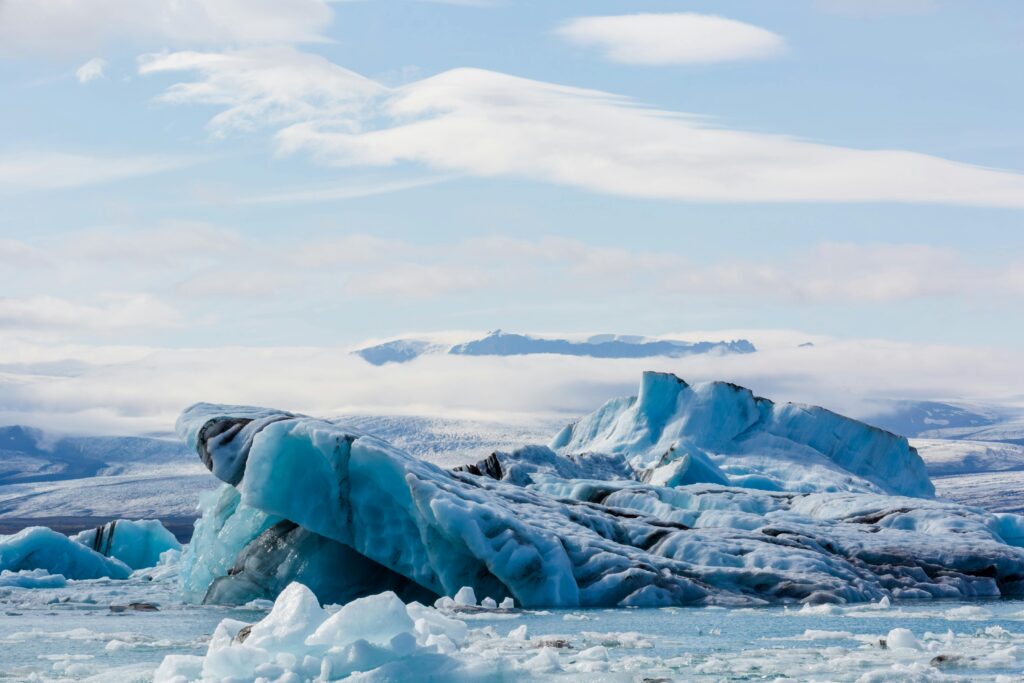
Normally, water that melts under the glaciers in Greenland seeps through the rock and into the ocean. In this case, the water pressure inside the subglacial lake increased until it forced the water to escape upwards, breaking through cracks in the ice surface. “What seems to have happened here is that if you put water in a situation where ice was frozen around it, you can actually create more pressure,” McMillan explained. This pressure led to an explosion. This event released the amount of water that will pass over Niagara Falls in full in 9 hours, in only 10 days.
Craters, Crevasses, and Ice Towers
The eruption caused major changes in the Greenland ice sheet. Researchers found layers of ice 25 meters high torn from the surface and spread all over the place. A deep crack separated the ice through which the water had passed. Huge cracks and ice towers as tall as a five-story building are scattered across the ice where water once flowed. The crater is 85 meters deep and about 2km² wide, twice the size of New York’s Central Park.
Rethinking Meltwater models
Greenland’s meltwater explosion is forcing scientists to completely rethink how glaciers work. It also forces scientists to reassess how much water Greenland can release and how quickly. Current computer models that predict the ice’s future behavior do not account for water that erupts from the surface of the ice. The models assume that water always flows down from the surface to the rocks to the ocean.
Read more: Antarctic Ice Sheet Nears Collapse, Scientists Warn Of Global Consequences
Greenland Meltwater and Global Sea Levels
The Greenland ice sheet, if completely melted, could raise sea levels by 7 meters. Ice is already a major contributor to sea level rise, losing about 267 billion tons of ice per year since 2002. A recent study predicts a sea level rise of 3.2 to 22.8 centimeters off Greenland by 2100.
Even a small, sudden release of meltwater can accelerate the movement of ice and disrupt ocean currents, putting coastal cities around the world at greater risk. Greenland’s meltwater strongly influences the Atlantic Meridional Overturning Circulation (AMOC), which affects climate and weather far from the Arctic.
Viewing the Changing Environment
The event was discovered thanks to advanced satellites and regular monitoring of the Arctic. Instruments such as CryoSat and ICESat-2 allow scientists to observe rapid changes in the surface and track the movement of the ice sheet in space. Data comes from multiple satellites, including CryoSat, Sentinel-1, Sentinel-2, and ICESat-2.
Continuous improvements in image interpretation are helping scientists monitor changes more accurately. Together, these developments enable them to see such events as they happen. Without this technology, such explosions would not be visible. Danish and European agencies are using this data to further understand how the Arctic is developing under climate pressure.
Global Implications and the Need for Continuing Education
The 2014 eruption may indicate what is happening as global temperatures continue to rise. With Arctic temperatures warming faster than anywhere else on Earth, Greenland is experiencing more extreme melting events. Snow is now melting 8 days earlier and refreezing 31 days later than the historical average. Meltwater’s unpredictable behavior could accelerate the movement of glaciers, reshape international coastlines, and lead to more abrupt climate change than scientists had previously predicted.
Read more: Scientists Say The Gulf Stream May Be Close To Collapse, Here’s Why That’s Bad For The Planet