The global prevalence of trauma
According to the World Health OrganizationPsychological trauma – exposure to serious injury, death, or sexual violence – affects seven out of 10 people at least once in their lifetime. Severe trauma can lead to PTSD, which is experienced by millions of people around the world, and often manifests as sudden, unwanted memories associated with highly distressing emotions.
Existing treatments for PTSD are effective but remain elusive. They tend to be over-utilized services that require multiple appointments with professionals, are not widely available, and are not recommended for those dealing with ongoing trauma.
Health care workers are often exposed to traumatic events, with limited treatment options often due to non-availability. In the UK, PTSD is on the rise among NHS staff increased from 13% before Covid-19 to 25% at the height of the epidemic. Health systems are under increasing pressure due to untreated stress among health professionals, poor mental health that causes people to be unable to work or leave the health care profession.
Circulation of the mind and the mind’s eye
Research focuses on treating intrusive, vivid and unwanted memories of the trauma, a hallmark of PTSD. A team of researchers, combining decades of experience in mental health and trauma research, expertise from the world’s leading emergency care research unit, and the latest statistical methods, conducted a randomized controlled trial to evaluate the effectiveness of a brief digital intervention for healthcare workers during the Covid-19 pandemic.
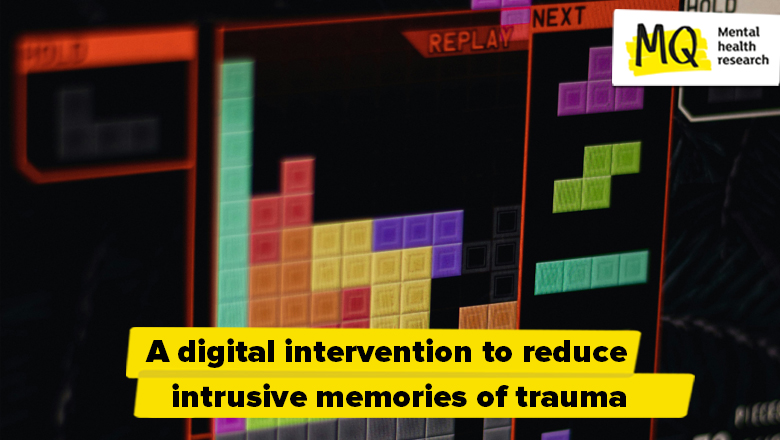
The treatment – called ‘Imagery Competing Task Intervention’ (ICTI) and detailed below – has been developed and refined over many years of laboratory research. Another part of this is the video game Tetris?which involves players rotating blocks of different, geometric shapes as they descend to fit them neatly into a grid.
- In the first step, participants recall the memory briefly, without needing to explain it or go into details.
- Next, they are taught how to use mental rotation, the ability to understand using the mind’s eye.
- ICTI then required participants to use this skill to play Tetris?but in a somewhat slower, not normal way of playing a normal game.
- The overall ICTI method is thought to occupy the visuospatial areas of the brain, therefore competing with the visual flashback, weakening its vividness and emotional impact, and more profoundly, the intrusive frequency.
To compare with ICTI, one control group of the trial listened to the music of Mozart, who is famous for its therapeutic benefits in relieving stress, and informational podcasts about him. In the second control group, participants received only standard care.
The results showed that participants who received ICTI had 10 times fewer intrusive memories than any control group four weeks after starting the intervention. Encouragingly, ICTI has also been very active in the long run. After six months, 70% of the participants who received the treatment reported no disturbing memories at all – a remarkable reduction compared to the control groups.
Participants using ICTI saw significantly improved outcomes in terms of PTSD symptoms, indicating a ‘domino effect’ of interventions to reduce these in general. This shows very promising potential.
Tayla McCloud, Digital Mental Health research lead at Wellcome, said:
These results are remarkable for using simple interventions. If we can get similar strong results in larger trials, this could have a much bigger impact. It’s rare to see something so accessible, scalable and flexible for all situations. It does not require patients to put their trauma into words and transcend language barriers. This research is an important example of why Wellcome is investing in a wide range of mental health interventions, so that in the future everyone can have access to treatment that works for them.