Meet the Brazilian Doctor Who Accepts Fruits and Gratitude Instead of Paying

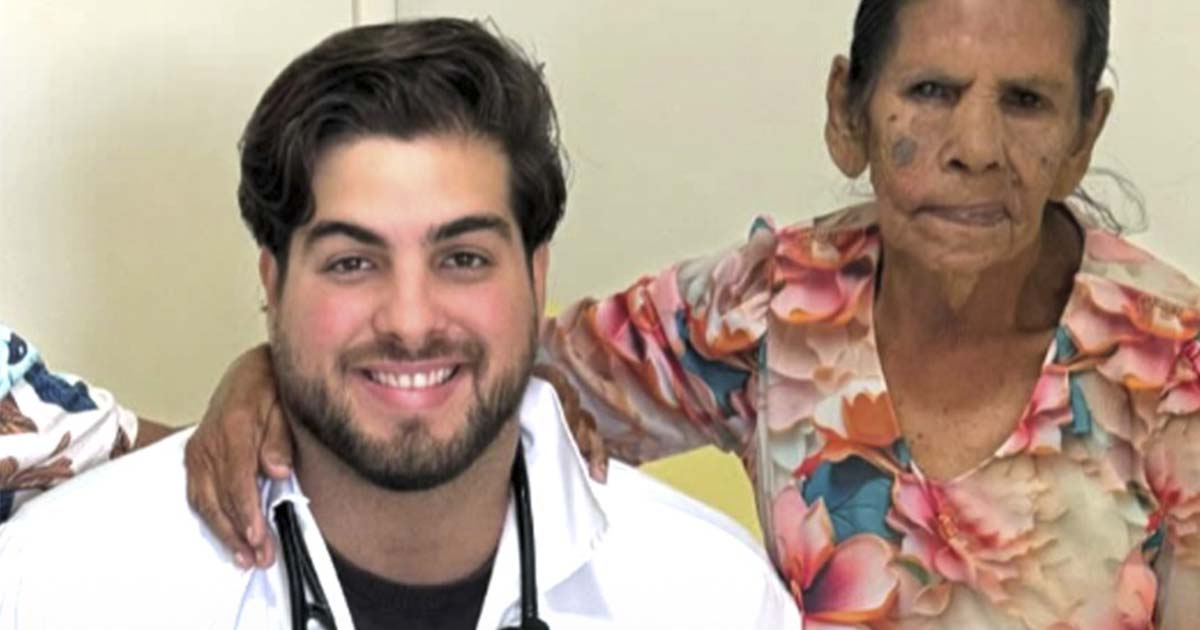
Douglas Ciríaco, a general practitioner in Brazil and a member of the Brazilian public health system (SUS), melts hearts with his selfless behavior. This 26-year-old doctor is the only doctor helping 10 rural communities in Ouro Branco, Alagoas. This municipality in northeastern Brazil has very limited access to health care. Douglas Ciríacor works with the Mais Médicos program, a government initiative that addresses the chronic shortage of doctors in underserved areas. Although he never expects a return, the young doctor sometimes receives gifts such as eggs, live chickens, pumpkins and scerola cherries, in return for his care.
Originally from Arapiraca, Alagoas, Ciríaco says he has never worked in a private clinic. Ciríaco said he joined the public health system because he believes that health care should be accessible regardless of a patient’s ability to pay for care. “I am a SUS doctor (Brazilian public health system),” he explained in an interview in August 2025. “I never charge for consulting.”
Ciríaco regularly receives gifts from patients, although he doesn’t consider it a payment. “Eggs, chickens, corn, acerola cherry, pineapple, pumpkins… this is a way of showing gratitude to the rural people,” he said.” Among his patients are two elderly sisters, Mrs. Cícera and Miss Antônia, who visited him because of various health problems.” They brought him a basket of eggs as a way of thanking him for his services.
Viral Image
Dr. Douglas Ciríaco kneels next to elderly patients Ms. Cícera and Ms. Antônia, showing the respect and humility shown by the villagers who show their gratitude with simple gifts of eggs, produce, and handmade items from their farms. Credit: Instagram.com/@dr.douglasciriaco
On his Instagram account, @dr.douglasciriaco, Ciríaco posted a photo of himself kneeling next to the 2 sisters with the caption, which reads: “Ms. Cicera and Ms. Antônia, it’s always a pleasure to receive this simple gift from you! Some things have their price, others have their price. Although they talk bad about SUS, the countryside continues here on the Internet!”
By November 2025, this post had gone viral, spreading through social media and reaching millions of users around the world who praised Ciríaco for his philanthropy in medical care. Ciríaco went on to share images of gifts in 2025, including live chickens, vegetables, and religious icons.
The doctor said that patients who bring him gifts show their appreciation for health care that would otherwise be out of reach. Mrs. Cícera and Ms. Antônia, who lives within the Primary Health Unit where Ciríaco is employed, is among the patients. According to the doctor, the gifts given by these patients show gratitude for the health services that they would otherwise not be able to receive. “They come to me with everything: pain, stress, a little bit of everything,” he said. “I am very happy, it makes me happy to know that my work is appreciated.”
One Doctor in Ten Communities
Ouro Branco is a rural municipality with an estimated population of 11,446, according to the 2022 census data. The region is plagued by extreme poverty, as the state of Alagoas reported that 11.8% of its population lived in extreme poverty in 2020. The municipal health infrastructure is struggling to meet the demand, especially in rural areas where residents have to travel long distances to receive medical care.
Ciríaco health care services include more than 10 farms and rural areas. “My rural area has more than 10 farms, and I am the only doctor,” he said. On Thursdays, he makes home visits to patients with mobility challenges, including senior citizens and those with chronic conditions such as high blood pressure and diabetes. “I go to their homes so that they can negotiate, because the situation is dire in the rural areas,” he explained.
Due to constant shortages of medicines and supplies, the doctor adapted his practice “the medicine of war.” He expressed a sense of satisfaction, saying, “We’re providing the best care that’s available right now, and that’s what gives me a sense of satisfaction, knowing that I was able to contribute to someone’s life in the best possible way.”
Mais Médicos: Addressing the Shortage of Rural Doctors
Ciríaco works with the Mais Médicos program, which was launched in July 2013 by the Brazilian government to reduce regional health care disparities. This program offers 3-year contracts to doctors who are willing to work in health care facilities located in the interior of the country, rural areas, and remote municipalities. Doctors receive a monthly stipend of R10,000 from the Ministry of Health, while municipalities provide housing, food, and transportation.
In its first public capacity in July 2013, 3,511 municipalities requested a total of 15,460 doctors. As of July 2014, the program has deployed 14,462 doctors in 3,785 municipalities, filling 93.5% of the requested positions. The Northern region, which includes Amazon, has seen more than 80% of its municipalities get doctors through this program. The Northeast, where Alagoas is located, saw 73% of municipalities get doctors.
The program has prioritized areas with high percentages of people living in extreme poverty, indigenous reserves, and regions that do not have easy access to health services. According to a 2016 study published in Rural and Remote Health, this program has decreased by 75% in the number of municipalities with less than 0.1 doctors per 1,000 people.
Ciríaco is a year into his 4-year contract with Brazil’s public health service. This young doctor said he joined because he wants to work where he is needed the most. “I thank God for my patients like me,” he said.
Brazil’s Health Care System and Rural Access
The Brazilian population, especially those with low incomes, rely heavily on the Unified Health System (SUS – Sistema Único de Saúde), which covers approximately 75.5% of the population. This program provides comprehensive, free health care, including basic, emergency, and specialist services (the latter requiring referral). Despite these provisions, significant differences in access to care remain in different regions of the country.
In 2020, Brazil had an average of 1.99 doctors per 1,000 residents nationally. Maranhão, the poorest region, had only 0.84 doctors per 1,000 inhabitants, while Rio de Janeiro had 3.75. A 2019 study found that 53.5% of low-income rural residents in Northeast Brazil live more than five kilometers from the nearest health center.
The physician shortage is particularly acute in Family and Community Medicine, a specialty that focuses on primary care. In 2020, Brazil had only 7,149 Family and Community Medicine doctors, representing 2.4% of all medical professionals in the country. Many rural districts continue to face challenges in recruiting and retaining doctors despite government efforts.
The Family Health Strategy, Brazil’s primary care model, has increased coverage from 7.8% of the population in 2000 to 58.5% in 2016. However, only 65% of Brazilians are covered by family health groups, leaving gaps in access to continuous, community-based care.
Thank you for the payment
Ciríaco emphasized that the gifts he receives are not payment for his services. “When patients give me these gifts, I don’t see them as payment, but as an act of love,” he said.Pure respect for my work.”
The doctor said he has found a variety of things other than eggs and produce. Patients brought him live chickens, pigeons, corn, string beans, avocados, and even small religious images. Each gift represents what patients can provide from their resources, often from their own farms or gardens.
Social media users who saw Ciríaco’s post praised both the doctor’s dedication and the patients’ generosity. One commenter on Facebook noted that the doctor knelt down in the picture to be at the same height as the old women, interpreting this gesture as a sign of respect. “He knelt down to be close to me, how beautiful he is! May God continue to bless this doctor every day,” the user wrote.
Ciríaco said he appreciates even simple gifts. “It’s always a pleasure to receive this simple gift from you! Some things have a price, some have a price,” he wrote in his Instagram post with Ms. Cícera and Ms. Antônia. The doctor said he approaches his work with humility and faith. “I ask God to give me wisdom,” he said.
Read more: 17-Year-Old Wins $250,000 Top Prize for Inventing Device That Could Prevent Hunger
Protecting SUS in Rural Areas
Ciríaco used his social media to defend Brazil’s public health system. In his viral Instagram post, he compared the criticism SUS receives online to the reality he sees in the countryside of Ouro Branco. “While people criticize the SUS (Brazilian public health system) on the internet, here in the countryside it remains strong!” he wrote.
The doctor’s statement highlights the tension in Brazil’s health care discourse. While critics point to long wait times, lack of resources, and infrastructure challenges in the government system, rural residents often have no choice. In communities like the one Ciríaco works in, SUS represents their only access to health care.
A 2023 study on access to health care in Brazil found that low-income people have greater access by walking to primary health care facilities than high-income people, mainly because primary care units are purposefully distributed to reduce inequality. However, access to complex health care remains concentrated in urban areas, leaving rural populations vulnerable to specialized care.
The gifts Ciríaco receives show that rural patients appreciate SUS care. Elderly sisters who brought eggs, patients who brought live chickens, and those who donated produce from their gardens thanked the doctor who appeared regularly in an area where medical professionals were scarce. Ciríaco said the recognition of the patient motivates him to continue working under challenging conditions. “I thank God my patients like me,” he said.
Read more: Medical Chef Reveals The Last Dish Most Requested By Patients